K-Pop Saved Me in My Teenage Years
4 min read


This article is a little throwback to my teenage years and a glimpse into what shaped me today. I will talk about adolescence and the unlikely thing that saved me in the midst of this challenging stage of life - K-pop.
Adolescence
Adolescence is defined as the stage of transition from a child to an adult. In my opinion, it is the hardest stage of life.
Aside from physiological changes (Wth is happening to me?!) which are overwhelming enough, there are also significant changes happening on a psychological level.
An adolescent finds him/herself in the face of many contradictions.
It is a time of having to break free from the dependence on caregivers but barely having enough power in the world (in terms of financial ability, social status or knowledge).
It is a time of having to find one's unique identity (sense of "I") but also somewhere to fit in and belong to.
It is a time of having to make sense of a world which is not at all like the fairytales told in childhood.
A Rebellious Phase
Adolescence also marks the start of a rebellious phase in one's life.
More often than not, there are negative perceptions attached to rebellion. What comes to mind is often a juvenile delinquent, deviant or dissident.
I certainly think it is unjustified to think so. In fact, rebellion is a cause for celebration. It is when one can assert his/her individuality to say "No!". The significance of this has to be understood. It can only come from the beginning of self-knowledge where one knows their preference ('I like/don't like this') and can formulate their opinions ("I think...").
My Teenage Rebellion
I was a rebellious teenager. It was not apparent on the outside. I did not skip school, get into bad company or engage in risky activities whatsoever. However, I did have a lot of differing opinions from the norms and authorities that I was expected to follow.
My rebellious phase started pretty early. At the age of 11, I remember voicing my objections to the way that my parents were treating me and the pressure they gave me to study hard for my PSLE (Primary School Leaving Examination), the first high-stakes national examination.
Unsurprisingly, my parents were very displeased. My objections were taken to be "顶嘴" (ding zui, or "talking back"), a behaviour that is frowned upon. It does not help that the Confucian value of filial piety holds much weight in Chinese families. Children are expected to be obedient to their parents and defiance is seen as a sign of disrespect.
The debilitating sense of powerlessness coupled with the struggles of adolescence gradually sent me into a deep descent.
K-Pop In My Youth
During those years, I found solace in something unexpected. In 2010 when I was 13, the Hallyu wave was just starting to make its way throughout Asia. K-pop (Korean pop) was one major part of the wave.
Although it is named "K-pop", it covers a wide range of genres from pop, rock, hip hop, R&B to electronic music. It is also characterised by idol groups which often consist of 4 or more members.
After I watched my first few K-pop music videos (Super Junior/Girl's Generation), I became hooked. Stylish idols, catchy beats, synchronised choreographies and aesthetic music videos... What is there not to love? I became quite a diehard fan. At one point, everyone in class knew me to be the K-pop fangirl.
One reason why I was so obsessed with K-pop is that I had not seen such a vibrant and creative form of expression in a culture that felt closer to mine. It came at a time when I was trying to develop self-expression.
Although the K-pop industry is highly manufactured in general, there is creative agency given to idol groups too. Certain members with a flair for composing write the songs and tell their personal stories in it.
I found solace as it validated my experiences and made me feel that I was not alone. It gave me the inner strength to keep on going even when external reality was downright depressing.
One could have easily called it escapism or superficial fangirling, but there was more to it.
Rebellion in K-pop
Over the years, the debut of many groups catalysed the evolution of K-pop into various subgenres and concepts. From cute to sexy, cheerful to dark. One of my favourite concepts was the rebellious concept.
We are not talking about rebellion for rebellion's sake. There are strong causes behind this rebellion when one further examines the context of society.
Korean society has a few striking similarities to Singaporean society. Both rose from one of the poorest countries to the richest ones in terms of per capita GDP in a short span of a few decades. With a lack of natural resources, both focus on human resources. Both are also strongly guided by Confucian values.
Like in Singapore, Korea has high academic pressure as evident in the prevalence of after-school classes in Hagwons (cram schools) and high-stakes examinations like Suneung (university entrance examination) which is believed to make or break one's future. It was no wonder I could resonate with the social issues that were being addressed.
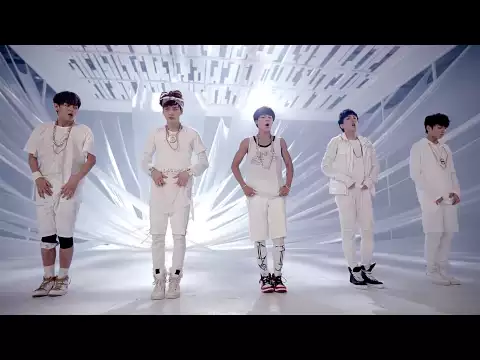
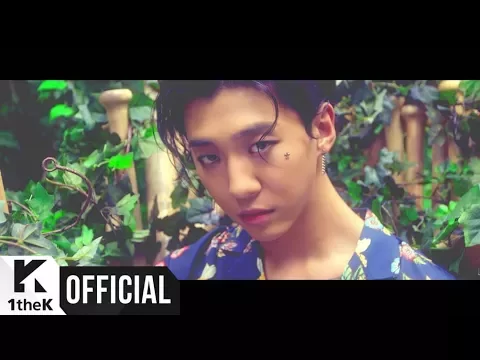
My influences in this aspect were groups such as BTS, B.A.P and Stray Kids. Listening to their songs really struck a chord with me. I list a few below for reference. (Do turn on the English translated lyrics!)
BTS' N.O is about saying no to the societal expectations imposed on the youth to study hard. (I thought the reference to the matrix was so cool omg)
Stray Kids' Voices is about not listening to the voices around you telling you what to do.
B.A.P's Honeymoon is about breaking free from constraints to find ultimate freedom and expression.
The Power Of Rebellion
There is something about the spirit of teenage rebellion that I see worthy of upholding even if we are past our adolescence. Rebellion is not just an assertion of our individuality but also an exercise of free will.
When you find yourself in a powerless position against strong external forces, this is your best shot at empowering yourself.
Say "No!" to the authorities who try to impose their will on you.
Say "No!" to a world that is less than what your heart knows to be ideal.
Say "No!" to a life that does not inspire you.
Even when all seems to be a lost cause, you can never lose one last thing - the ability to say "No!" to giving up.
Conclusion
Looking back, I am thankful to K-pop in my youth for showing me a world of possibilities for expression and keeping the flame in me alive. I am also grateful for that rebellious streak in me that refused to give up in the hardest times.